Staring at a loan application for the first time triggers a specific kind of anxiety. Every option looks reasonable until you read the fine print.
Financing options multiply every year. Personal loans, credit cards, buy-now-pay-later apps, SBA programs. The list keeps growing, and the differences between them keep getting harder to spot. A wrong pick here doesn’t just cost money. It eats months of your life in paperwork, fees, or repayment schedules that don’t match your income pattern.



This guide breaks down what each financing option costs you beyond the interest rate, because that number alone is a terrible way to compare loans.
Personal Financing Options That First-Time Borrowers Search For
The personal financing category is the widest and the most confusing. These products target different problems, but lenders market them with nearly identical language. So the burden of figuring out which one fits falls entirely on you, the borrower.
Personal Loans vs. Credit Cards vs. BNPL: Side-by-Side
I think the fastest way to see the differences between personal loans, credit cards, and buy-now-pay-later services is a direct comparison across the criteria that matter during your first year of use.
| Feature | Personal Loan | Credit Card | Buy Now, Pay Later |
|---|---|---|---|
| Interest structure | Fixed rate, set monthly payments | Variable rate, compounds on unpaid balance | Usually 0% if paid on schedule |
| Typical use | Debt consolidation, large purchases | Everyday spending, emergencies | Retail purchases, split payments |
| Credit check required | Yes, hard pull | Yes, hard pull | Soft pull or none |
| Risk if you miss payments | Late fees, credit score damage | High interest accumulation, credit damage | Late fees, possible reporting to bureaus |
| Speed of access | Days to weeks | Instant after approval | Instant at checkout |
The takeaway: BNPL looks free, but it trains spending habits that can spiral fast when those zero-interest windows close.
The Hidden Psychology of Buy Now, Pay Later
BNPL services get marketed as interest-free financing. And technically, that’s true if every payment lands on time. But the part nobody discusses is the behavioral effect.
Breaking a $400 purchase into four payments of $100 doesn’t feel like debt. It feels like a budget hack. That disconnect is why missed BNPL payments have been climbing since these services went mainstream.
I would avoid using BNPL for anything over $200 based on the fee structures I’ve seen across Klarna, Afterpay, and Affirm, where a single missed installment can trigger fees between $7 and $25 per occurrence.
That money adds up silently. And because BNPL providers have started reporting to credit bureaus in 2025 and 2026, a late payment now follows you the same way a missed credit card bill does.
When a Personal Loan Beats a Credit Card
A personal loan makes more sense than a credit card when the amount exceeds $3,000 and you need a fixed repayment timeline.
Credit cards work for smaller, recurring expenses. But for a single large cost, like medical bills or moving expenses, the fixed rate and set end date of a personal loan remove guesswork.
Lenders look at your credit score, income, and sometimes your employment length before approval. That process takes longer than swiping a card, but the predictability of monthly payments is worth the wait.
Home Equity Loans and Lines of Credit: Borrowing Against Your House
Homeowners sitting on equity have a different set of financing options.
These products tap into the value you’ve already built in your property, and they tend to carry lower interest rates than unsecured loans. But that lower rate comes with a catch: your home is the collateral.
Home Equity Loan vs. HELOC
A home equity loan gives you a lump sum with a fixed interest rate. A HELOC (home equity line of credit) works more like a credit card tied to your home’s value.
The loan is better for a one-time expense. The HELOC is better for ongoing costs, like a renovation that happens in phases.
The risk with both is identical. Fall behind on payments, and the lender can move toward foreclosure. That risk is why I think home equity borrowing should only cover expenses that add value back to the property or eliminate higher-interest debt.
A common mistake is pulling equity to fund a vacation or a wedding. The math never works out. A $15,000 HELOC at 8% over 10 years costs roughly $3,600 in interest alone, and the thing you spent it on depreciates to zero overnight.
Business Financing Options for Startups and Small Companies
Borrowing for a business feels different than borrowing for personal use, mostly because the stakes are tied to revenue you haven’t earned yet. The options split into two camps: slow money with better terms, and fast money with higher costs.
SBA Loans: Low Rates, Long Waits
SBA loans are government-backed through the U.S. Small Business Administration. The rates tend to be lower than conventional business loans, and repayment terms can stretch longer. Sounds great on paper.
But the application process can take weeks or months. Documentation requirements include business plans, financial projections, tax returns, and sometimes personal financial statements.
For a business that needs cash within 30 days, an SBA loan is often too slow.
I would pick an SBA loan only for expansion projects with a timeline of 6+ months, based on the processing times listed on sba.gov, where the standard 7(a) loan can take 30 to 90 days to close.
A restaurant trying to cover next month’s rent has no use for that timeline.
Merchant Cash Advances: Fast Cash, Expensive Repayment
A merchant cash advance gives a business quick funds in exchange for a percentage of daily credit card sales. Speed is the selling point. Some providers fund within 24 to 48 hours.
The cost is the problem. Instead of a traditional interest rate, merchant cash advances use a factor rate, typically between 1.2 and 1.5. A $10,000 advance at a 1.4 factor rate means you repay $14,000 total.
That’s $4,000 in fees on money you might pay back in under a year.
These products suit businesses with strong, consistent daily card sales. A seasonal business or one with unpredictable revenue will feel the squeeze hard.
Online Lenders and Peer-to-Peer Platforms
Platforms like LendingClub and Funding Circle connect borrowers directly to investors. The approval process moves faster than a bank, and credit requirements can be more flexible.
The trade-off is rate variation. Two borrowers with similar profiles might get offered different rates based on investor demand that week. There’s less standardization than a traditional bank loan, and less regulatory cushion if something goes wrong.
For startups or freelancers who can’t show two years of business tax returns, these platforms sometimes open a path that banks won’t.
But interest rates on peer-to-peer loans can land anywhere between 6% and 36%, so comparing multiple offers is non-negotiable.
Auto Loans and Student Loans: Dedicated Financing for Big-Ticket Needs
Cars and education have their own lending ecosystems, separate from general personal loans. The terms, incentives, and eligibility rules differ enough that treating them like regular loans leads to overpaying.
Auto Loan Traps to Watch For
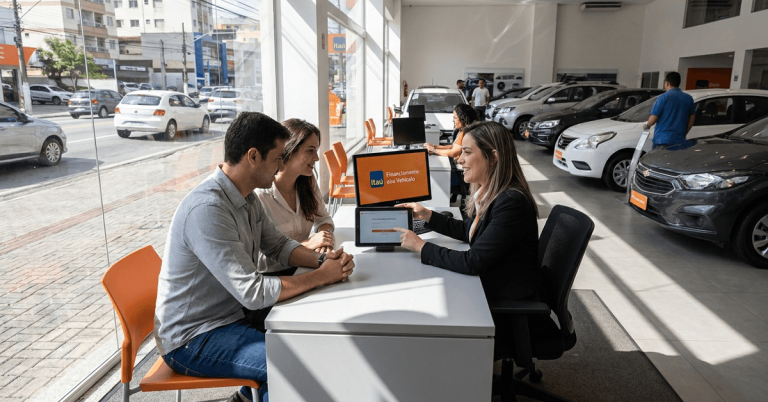
Dealership financing is convenient. The salesperson offers a rate, you sign, and you drive away. But dealership auto loans often carry markups above what a bank or credit union would offer directly.
A few things to check before signing at the dealership:
- The loan term: anything past 60 months means you’ll likely owe more than the car is worth within a couple of years
- The GAP insurance pitch: dealerships charge $500 to $700 for this; your regular insurance company may offer it for under $100 per year
- Rate markup: dealers can legally add 1% to 2% on top of the lender’s rate as profit, and they don’t have to tell you
Getting pre-approved through a bank or credit union before visiting the dealership gives you a benchmark number. That number is your leverage.
Student Loans: Federal vs. Private
Federal student loans carry fixed rates set by Congress and offer income-driven repayment plans. Private student loans come from banks and online lenders, with rates that depend on credit score and co-signer status.
The federal option should be the first stop for anyone eligible.
Borrowing limits exist (currently $5,500 to $12,500 per year for undergraduates, depending on year and dependency status), but the protections are worth it: deferment options, income-based plans, and potential loan forgiveness programs.
Private loans fill the gap when federal aid falls short. But they lack the same safety nets, and variable rates can climb over time.
The Contrarian Take: Stop Chasing the Lowest Interest Rate
The standard advice is to always pick the financing option with the lowest APR. I disagree with that advice based on how SBA loan processing times on sba.gov show closings taking 30 to 90 days while merchant cash advances fund within 48 hours.
An interest rate is one number inside a larger equation. Origination fees, processing time, and opportunity cost all matter.
A 6% SBA loan that takes 90 days to close might cost a small business $15,000 in lost revenue during the wait. A 12% online loan that funds in a week could pay for itself by keeping operations running.
The same logic applies to personal borrowing.
A 0% BNPL plan with a $25 late fee per missed installment can become more expensive than a personal loan at 9% if your income is irregular. The cheapest-looking option is only cheap when everything goes perfectly.
Run the math on total cost of borrowing, not just the rate. Include fees, time, and your realistic ability to meet every payment on time. That calculation tells you more than any APR comparison tool on Bankrate ever will.
Questions People Ask About Financing Options
Q: Can I use multiple financing options at the same time? Absolutely, and many people do. The issue is total debt load. Carrying a personal loan, a credit card balance, and BNPL installments at the same time pushes your debt-to-income ratio up, which makes future borrowing harder and more expensive.
Q: Do financing options affect my credit score differently? They do. Hard credit pulls from personal loans and credit cards ding your score temporarily. BNPL services now report to credit bureaus in 2026, so they affect your score too. The type of credit mix also matters: installment loans and revolving credit are scored differently.
Q: What financing option is best for emergencies? Credit cards offer the fastest access for true emergencies. Personal loans take days to fund. BNPL only works at participating retailers. For medical emergencies, many hospitals offer interest-free payment plans directly, which is a financing option people forget to ask about.
Q: Should I consolidate multiple debts into one loan? Consolidation can lower your monthly payment and simplify tracking. But watch the total repayment timeline. A lower monthly number spread over a longer period often means paying more interest overall. Compare the total cost, not just the monthly number.
Q: Are online lenders safe to borrow from? Licensed online lenders operating in your state follow the same lending laws as banks. Check that any platform you use is registered with your state’s financial regulatory body. Peer-to-peer platforms like LendingClub carry FDIC-insured notes on the lending side, but borrower protections vary by platform.
Conclusion
Every financing option carries a cost beyond the interest rate printed on the application page. Fees, timing, and repayment flexibility shape the real price you pay over months or years.
The best loan for your situation is the one whose total cost and timeline match your income pattern. Start comparing origination fees and funding speed before you ever look at the APR.