A $400 pair of ANC headphones will kill the hum of an air conditioner. It will soften the rumble of a train passing outside. And it will do almost nothing about the coworker on a speakerphone two desks away, or the neighbor’s kid screaming through the wall.
That gap between what noise cancelling devices promise and what they deliver trips up a specific kind of buyer. The person shopping for quiet during work-from-home hours needs voice reduction, not low-frequency hum removal.
This piece is for the remote worker or apartment dweller who keeps searching “best noise cancelling” and ending up with gear that handles the wrong frequencies. The fix might cost $0.50, not $350.
How Active Noise Cancellation Handles Sound and Where It Falls Apart
ANC technology sounds like science fiction when you read the product page.
Built-in microphones pick up ambient sound, internal circuits generate an opposing sound wave, and the two cancel each other out. The execution, though, has a hard ceiling built into physics.
Low-Frequency Sounds vs. Everything Else
Active noise cancellation works best on steady, low-frequency noise. Air conditioning units, airplane engines, refrigerator drones, and train rumble sit in the frequency range where ANC excels.
These sounds have consistent, predictable wave patterns that the circuitry can mirror.
Voices, dog barks, door slams, and construction hammering sit higher on the frequency spectrum. They’re also irregular, which means the microphone-to-speaker loop can’t predict and counter them fast enough.
A Bose or Sony headphone running full ANC will take the edge off a conversation, but it won’t eliminate it. That matters because most complaints about home noise center on voices and sharp interruptions, not the steady hum of machinery.
The Compression Effect Nobody Mentions
One thing I find consistently overlooked about ANC headphones, including models like the Sony WH-1000XM5: the anti-noise processing creates a faint pressure sensation in the ear canal.
Some people describe it as the feeling of being on a plane that just changed altitude. For an hour of music, this is barely noticeable. For eight hours of focused remote work, it can build into a headache or general fatigue. This pressure effect varies across brands and even across firmware updates.
Bose tends to produce less perceived pressure than Sony in the same price tier, though individual sensitivity plays a big role. The point is that a device meant to reduce stress can quietly introduce a different kind of discomfort over a full workday.
Passive Noise Isolation Is Cheap, Boring, and Frequently Better
Passive isolation gets treated like the budget consolation prize in every noise cancelling comparison. Foam earplugs, well-fitted silicone tips, and over-ear cushions that form a physical seal around the ear. No batteries, no charging, no firmware.
How Physical Barriers Handle Higher Frequencies
The physics of passive isolation favor exactly the frequencies ANC struggles with. A dense foam earplug with a Noise Reduction Rating (NRR) of 32 dB blocks more voice-frequency sound than most $300 ANC earbuds.
The barrier is mechanical: sound waves hit a physical obstacle and lose energy before reaching the eardrum. Over-ear headphones with thick cushion pads combine both approaches. The pad creates passive isolation while the ANC circuit handles the low-end.
This layered method outperforms either technique used alone. I’d argue that the combination of passive seal plus ANC should be the default recommendation, not standalone ANC, yet most product roundups treat the physical fit of the ear cup as an afterthought.
Cost Per Hour of Quiet
A box of 200 disposable foam earplugs costs around $20 on Amazon. That works out to roughly $0.10 per pair.
For someone who needs quiet during sleep or focused work and doesn’t care about listening to music simultaneously, foam earplugs outperform a $350 headphone on raw noise reduction across mid and high frequencies.
This doesn’t mean ANC headphones are pointless. It means the right tool depends on the specific sound problem. Buying ANC to block voices is like buying a sports car to haul furniture: expensive, impressive, and wrong for the job.
Noise Cancelling Devices Compared by Sound Type
Different devices handle different noise profiles. This table maps the common device types against the sounds most people complain about at home and in offices.
| Device Type | Steady Low Noise (AC, fans) | Voices and TV | Sharp Bursts (dogs, doors) | Price Range |
|---|---|---|---|---|
| ANC Over-Ear Headphones | Strong | Moderate | Weak | $150 to $450 |
| ANC Earbuds | Moderate | Moderate | Weak | $100 to $300 |
| Foam Earplugs (NRR 32) | Moderate | Strong | Strong | Under $1 per pair |
| Desktop White Noise Machine | Masks, doesn’t cancel | Masks partially | Masks partially | $20 to $80 |
The column that matters most for apartment dwellers is “Voices and TV.” Foam earplugs and layered ANC-plus-seal headphones perform best there.
Picking the Right Device Based on the Noise, Not the Brand
Brand loyalty drives most noise cancelling purchases. Bose, Sony, Apple, and Sennheiser each have devoted followings, and every “best noise cancelling headphones” list shuffles the same four names.
But the brand matters less than matching the device to the noise source.
Office and Coworking Spaces
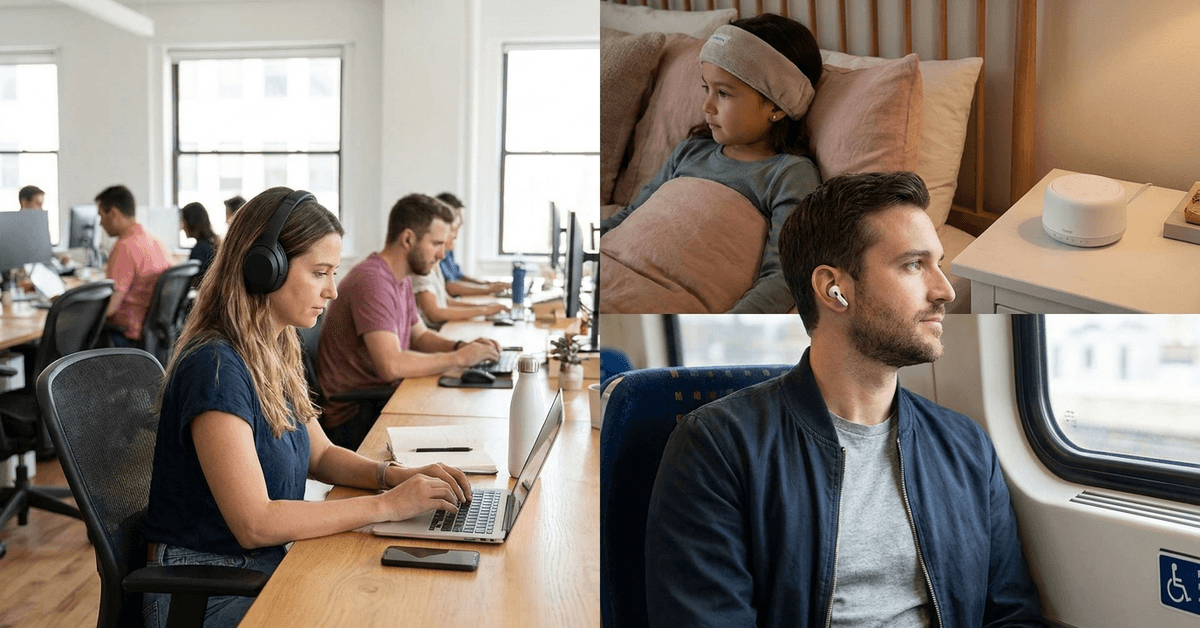
Open offices generate a mix of keyboard tapping, phone calls, and HVAC hum. ANC over-ear headphones handle the HVAC portion well, and the passive seal of a good ear cushion softens conversation bleed.
The Bose QuietComfort series has long been a default pick for this use case, partly because the clamping force is light enough for all-day wear.
One mistake to avoid: buying ANC earbuds for an open office and expecting them to perform like over-ear cans. The smaller driver and reduced passive seal mean earbuds let more voice-range sound through. If voices are the main distraction, over-ear wins.
Sleep in a Noisy Apartment
Sleep noise is a different problem. Most sleepers can’t wear bulky over-ear headphones, and hard plastic earbuds press painfully into the pillow. Sleep-specific options include:
- Moldable silicone earplugs that conform to the ear canal and stay put through the night
- Sleep headbands with flat speakers sewn into soft fabric, playing white noise or pink noise
- Desktop white noise machines placed on the nightstand, which mask sudden sounds like traffic spikes or neighbor activity
I think white noise machines paired with moldable earplugs handle sleep noise better than any $250 ANC earbud designed for daytime use.
The earbud form factor trades comfort for features a sleeping person doesn’t need: Bluetooth, app control, transparency mode.
Commuting and Travel
Airplane and train commuters get the most out of standalone ANC. Engine noise sits squarely in the low-frequency sweet spot. Sony’s WH-1000XM5 and Apple’s AirPods Pro both perform well here, though the AirPods Pro tip seal varies by ear shape.
A loose seal tanks the passive isolation, which pulls down the ANC performance too.
Commuters should test ear tip sizes seriously. A 2mm difference in silicone tip diameter can shift noise reduction by several decibels. This is the kind of detail that a product page never mentions but determines whether the $250 purchase feels worth it.
Common Mistakes That Waste Money on Noise Cancelling
The gap between expectations and results usually comes down to a few repeated errors. Avoiding them saves both cash and frustration:
- Buying ANC to block voices without checking the passive seal first. The seal does most of the voice-frequency work. A poor-fitting $350 headphone blocks less voice noise than a well-fitted $50 pair.
- Skipping the return window. Noise cancelling is personal. Ear canal shape, sensitivity to ANC pressure, and specific noise sources all vary. Brands like Bose offer 90-day return windows. Use them.
- Ignoring battery dependency. ANC stops working when the battery dies. A mid-flight dead battery on a long-haul trip turns a $400 headphone into a mediocre passive pair. Carrying foam earplugs as a backup costs nothing and weighs nothing.
- Assuming “higher price equals more silence.” Price correlates with sound quality for music playback, codec support, and build materials. It does not reliably correlate with raw noise reduction for everyday home sounds.
The American Academy of Audiology recommends limiting headphone use to 60% volume for no more than 60 minutes at a time. Noise cancelling can help here by reducing the need to crank volume to compete with background noise.
Questions People Ask About Noise Cancelling Devices
These come up constantly in forums and product Q&A sections, and the answers are usually buried under marketing copy.
- Q: Do noise cancelling headphones block all sound? No. ANC targets low-frequency steady sounds effectively. Voices, sudden noises, and high-pitched sounds still get through to varying degrees. Pairing ANC with a tight passive seal gets closer to full coverage, but total silence isn’t realistic with any consumer device.
- Q: Are noise cancelling earbuds safe for sleeping? They can be, but comfort matters more than specs for sleep use. Hard plastic tips press into the ear canal when lying on a pillow. Soft silicone or foam tips designed for sleep last longer through the night without discomfort. Battery life also needs to cover a full sleep cycle if ANC is on.
- Q: Can white noise machines replace noise cancelling headphones? They serve different purposes. White noise machines mask sounds by adding a constant audio layer, while ANC headphones reduce specific frequencies. A white noise machine works well for sleep and stationary desk work. It won’t help on a bus or in a coffee shop.
Conclusion
Noise cancelling gear solves a real problem, but the solution depends on the specific sound causing trouble. ANC alone handles hums and drones well, while voices and sharp sounds need passive isolation or a layered approach.
Matching the device to the noise type matters more than matching it to a price point or brand name. Start by identifying the exact sound that drives you out of focus, then pick the cheapest tool that blocks it.