You play a key role in pizza quality when you handle in-store dough preparation.
Your accuracy and consistency directly affect texture, taste, and customer satisfaction.



This guide explains exactly what you need to know about Pizza Hut in-store kitchen staff’s dough prep tasks.
Overview of the Dough Prep Role
You are responsible for preparing the foundation of every pizza served in-store. Your role focuses on precision, timing, and consistency.
You support kitchen flow by ensuring dough is ready before service begins.
- Primary Responsibility: Prepare fresh dough in accordance with company recipes and daily production targets.
- Operational Support: Ensure sufficient dough is available during peak hours and for special orders.
- Quality Control: Check texture, elasticity, and portion accuracy before use.
- Team Coordination: Work closely with cooks and shift leaders to align prep volume with demand.
- Food Safety Compliance: Follow hygiene, storage, and labeling standards at all times.
- Equipment Handling: Operate mixers, scales, and storage units safely and correctly.
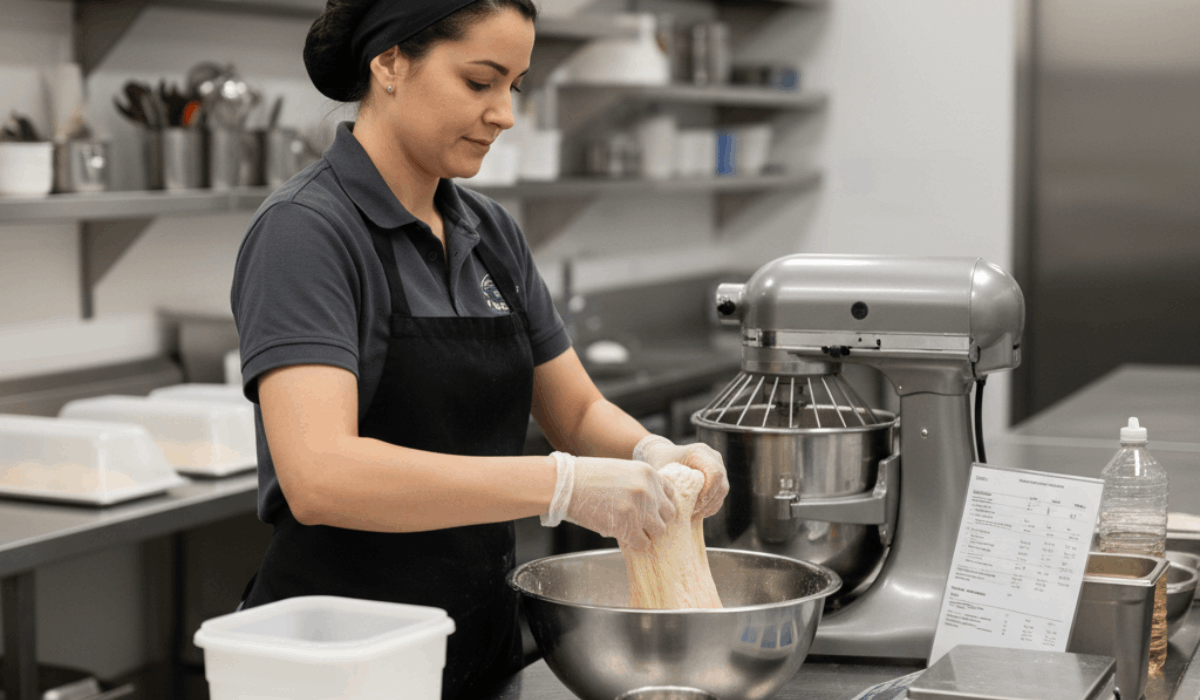
Core Dough Preparation Responsibilities
You are expected to follow strict preparation standards every shift. Your focus is consistency, accuracy, and food safety.
Each step must be completed correctly to protect product quality and service speed.
- Measuring Ingredients: Weigh flour, water, yeast, oil, and other ingredients using approved scales to ensure precise ratios.
- Mixing Process: Operate commercial mixers according to time and speed settings specified in company guidelines.
- Texture Verification: Check dough elasticity and smoothness before approving it for portioning.
- Portion Control: Divide dough into exact weights for different crust types and menu items.
- Proofing Monitoring: Allow dough to rise under controlled temperature and timing conditions.
- Storage Preparation: Label, date, and store dough using proper rotation procedures.
- Sanitation Practices: Clean prep areas, tools, and equipment immediately after use.
Dough Portioning and Shaping
You must divide and shape the dough with precision. Your consistency affects crust thickness and baking results.
Every portion must meet exact size and weight standards.
- Weighing Portions: Use approved scales to divide dough into correct weights for each pizza size.
- Uniform Division: Cut portions evenly to avoid product inconsistency.
- Shaping Process: Press or stretch dough into the required pan or hand-tossed forms.
- Crust Thickness Control: Maintain standard thickness to ensure even baking.
- Pan Preparation: Lightly oil pans and position the dough correctly before proofing or topping.
- Air Bubble Removal: Smooth the surface to prevent uneven texture during baking.
- Readiness Check: Confirm each portion meets visual and measurement standards before use.
Proofing and Storage Procedures
You must control time and temperature carefully during proofing. Your attention prevents over-fermentation or underdeveloped dough.
Proper storage protects freshness and food safety.
- Controlled Proofing Time: Allow dough to rise only within approved time limits.
- Temperature Monitoring: Keep proofing and storage areas within the required temperature ranges.
- Humidity Awareness: Ensure the environment supports proper fermentation without drying the dough.
- Visual Inspection: Check size, elasticity, and surface condition before approving use.
- Labeling Standards: Mark each batch with the preparation date and time.
- FIFO Rotation: Use the First-In, First-Out method to prevent waste and expiration.
- Sealed Storage: Cover and refrigerate dough properly to maintain freshness.
Sanitation and Food Safety Standards
You must follow strict hygiene rules at all times. Your actions protect customers and maintain compliance with health regulations.
Clean work habits prevent contamination and product waste.
- Hand Hygiene: Wash and sanitize your hands before handling ingredients and after any contamination risk.
- Glove Use: Wear clean gloves when required and replace them regularly.
- Surface Sanitizing: Disinfect prep tables, mixers, and tools before and after use.
- Cross-Contamination Prevention: Keep raw ingredients and ready-to-use items separated.
- Proper Uniform: Wear approved clothing, hair restraints, and non-slip shoes.
- Temperature Control: Keep ingredients and prepared dough within safe storage ranges.
- Waste Disposal: Remove trash promptly and keep bins covered and clean.
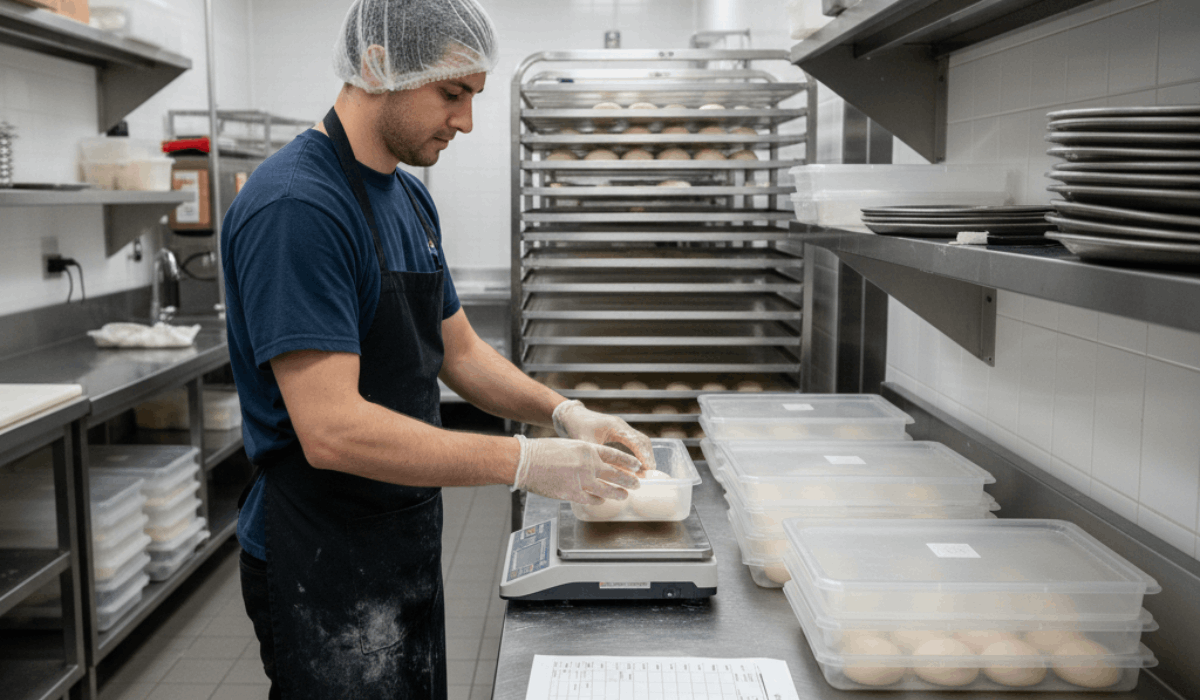
Speed and Productivity Expectations
You must work efficiently without sacrificing accuracy. Your pace affects service time and customer satisfaction.
Productivity standards ensure the kitchen stays prepared during peak hours.
- Daily Production Targets: Prepare the required dough volume before service begins.
- Time Management: Complete mixing, portioning, and storage within scheduled prep windows.
- Peak Hour Readiness: Anticipate busy periods and adjust batch sizes accordingly.
- Workflow Organization: Keep tools and ingredients arranged to reduce delays.
- Consistency Under Pressure: Maintain quality even during high-demand shifts.
- Minimal Waste: Avoid errors that lead to discarded batches or remakes.
- Team Coordination: Communicate with supervisors to align prep output with sales forecasts.
Physical and Skill Requirements
You must meet both physical and technical demands in this role. Your stamina and attention to detail directly affect performance.
Consistency depends on discipline and proper technique.
- Standing Endurance: Remain on your feet for extended periods during prep and service.
- Lifting Capacity: Handle ingredient bags and dough trays safely, often up to moderate weight limits.
- Manual Dexterity: Stretch, press, and portion dough with steady hand control.
- Repetitive Motion Tolerance: Perform mixing and shaping tasks repeatedly without losing accuracy.
- Attention to Detail: Follow measurements and timing standards precisely.
- Basic Math Skills: Calculate portions and batch quantities when needed.
- Team Communication: Coordinate clearly with kitchen staff and supervisors.
Common Challenges in Dough Prep
You will face pressure, timing limits, and consistency demands daily. Your ability to stay focused determines product quality.
Identifying challenges early helps you prevent mistakes.
- Time Pressure: Completing batches quickly during peak production periods.
- Inconsistent Texture: Adjusting dough when humidity or ingredient ratios affect elasticity.
- Over-Proofing Risk: Monitoring fermentation closely to prevent waste.
- Equipment Issues: Handling mixer malfunctions or scale inaccuracies without delaying prep.
- Temperature Fluctuations: Managing storage conditions that impact dough performance.
- High Volume Demand: Scaling production without reducing accuracy.
- Physical Fatigue: Maintaining precision despite repetitive tasks and long shifts.
Career Growth Opportunities
You can build long-term skills through consistent performance at Pizza Hut in-store.
Your reliability opens the door to greater responsibilities within the kitchen team. Growth depends on discipline, teamwork, and measurable results.
- Cross-Training: Learn topping, oven, and inventory tasks to expand your skill set.
- Shift Leadership: Move into crew trainer or shift lead roles with proven consistency.
- Operational Knowledge: Gain experience in food safety audits and inventory control.
- Performance Recognition: Earn promotions through productivity and quality standards.
- Management Path: Progress toward assistant manager or store manager positions.
- Transfer Opportunities: Apply for roles in other locations within the company.
- Skill Development: Improve time management, communication, and kitchen coordination skills.
Final Thoughts on Pizza Hut Dough Prep Responsibilities
Your role in dough preparation directly impacts product quality and store performance.
When you stay precise, efficient, and consistent, you build valuable kitchen skills that support long-term growth.
If you are ready to work in a fast-paced environment and develop practical food preparation experience, apply for a Pizza Hut in-store position today.